
Estepona
A working Spanish town on Andalusia's western Costa del Sol, between Marbella and Sotogrande.
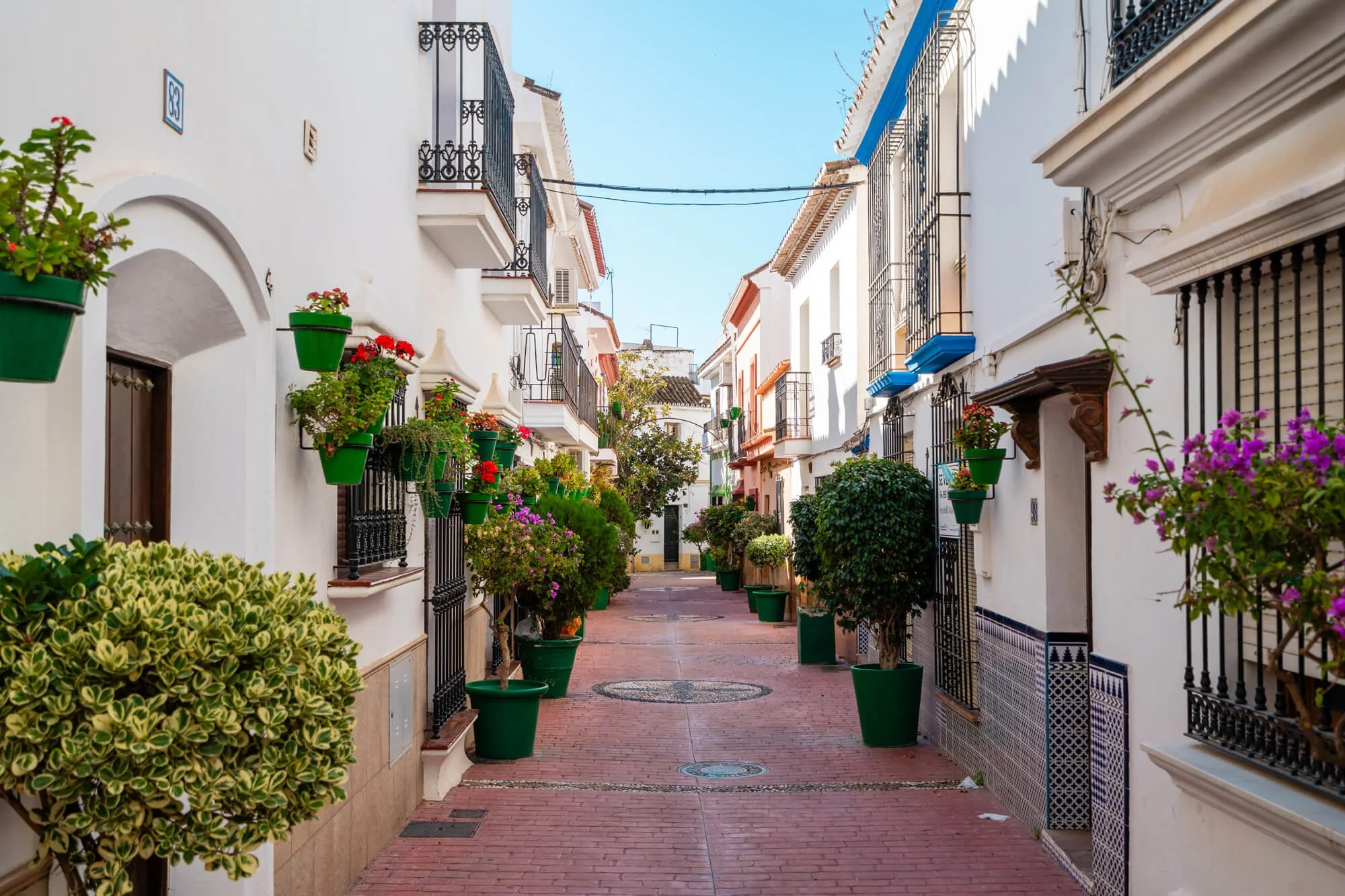
For buyers who've spent time looking along this coastline, Estepona often arrives as a relief. It has the infrastructure of a mature resort and the soul of a Spanish town. Whitewashed streets, working plazas, a real harbour, and a year-round rhythm that doesn't slow down when summer ends. The polish of Marbella sits ten minutes east, but Estepona itself remains substantially its own place: cultured, walkable, lived-in.
This page is our practical guide to what Estepona actually offers. The place itself, the lifestyle, the market, and how it compares to the better-known names nearby. Estepona has been home for over twenty years, and watching it grow into one of the most liveable towns on this coast has been a real pleasure — one we genuinely want to share.

Harbour & Town
Estepona's centre is a working old town. Whitewashed streets that still serve their original purpose, plazas where locals meet for the evening paseo, shops that sell what residents actually need rather than what tourists might buy. The old quarter is what gives the town its identity, and what makes it feel substantially different from purpose-built resorts further east.
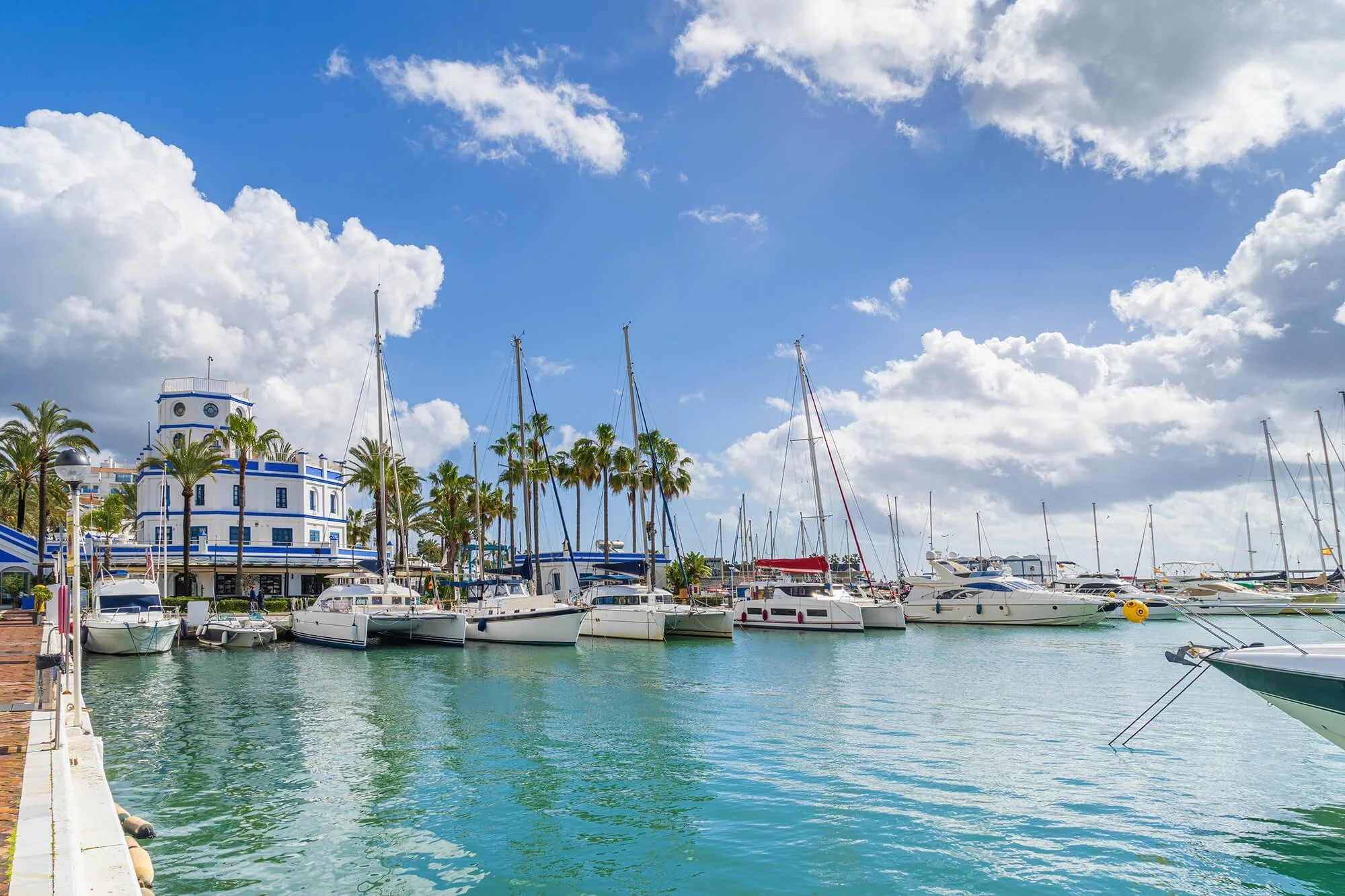
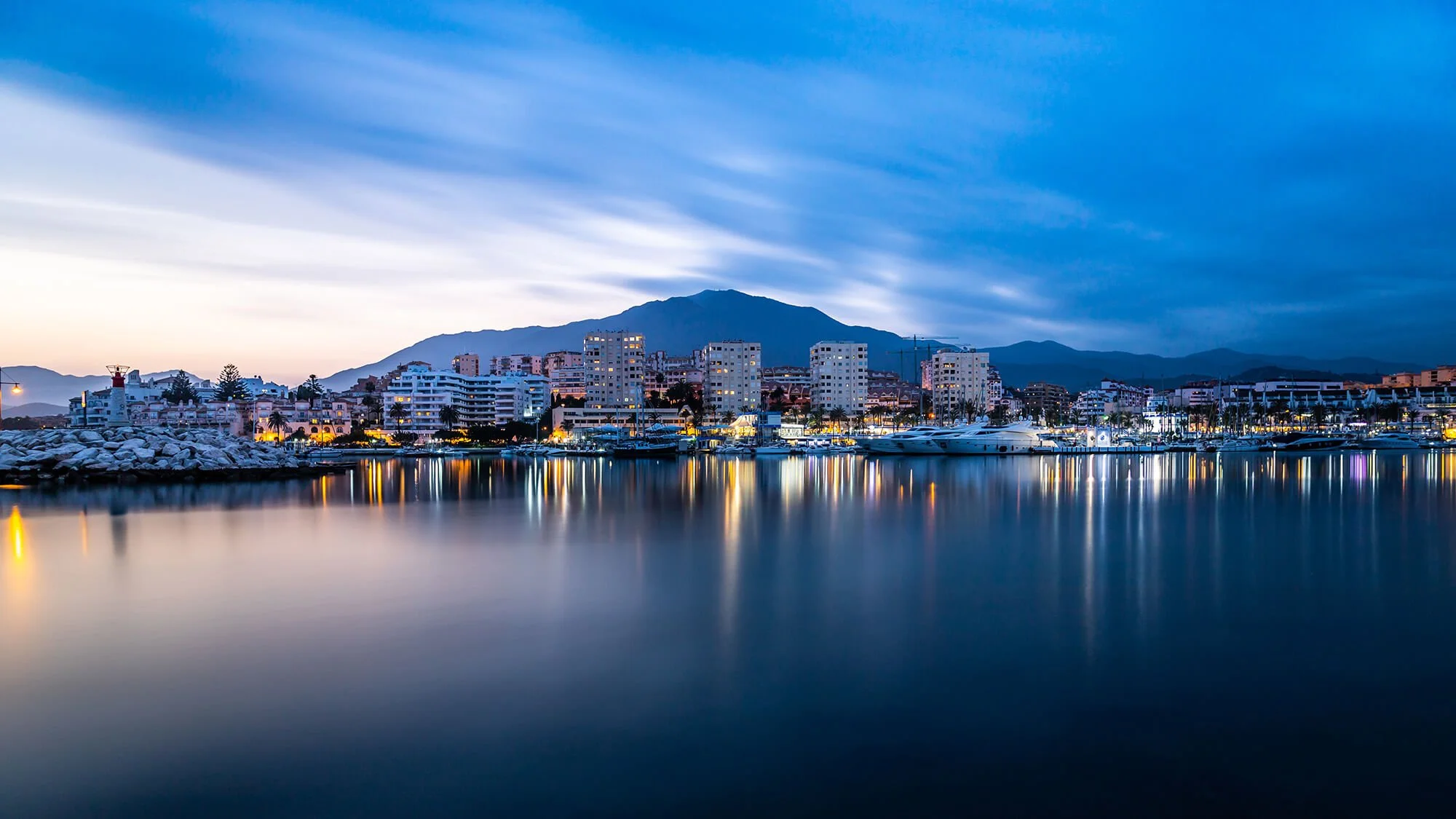
The harbour is a working marina too. Fishing boats moor alongside leisure craft, the morning catch is sold on the quayside, and the restaurants face the water without polishing themselves into something they're not. It's quieter and more authentic than Puerto Banús and prettier than most marinas on the coast, and it operates year-round rather than emptying out in winter.
Between old town and harbour, Estepona has built one of the longest continuous beachfront promenades in southern Spain. Around seven kilometres of paved seafront, palm-shaded for much of its length, used daily by residents walking, running, and cycling. It connects the working town to the residential developments either side, and gives the whole place a single coherent spine.
Climate & Setting
The setting matters more in Estepona than buyers tend to expect. The Sierra Bermeja rises immediately behind the town, dark with pinewoods and red iron-rich earth, climbing to almost fifteen hundred metres at Los Reales. The protected Pinsapo reserve sits within these mountains, home to a rare endemic fir that has survived on this peninsula since the Ice Age. It is, quietly, one of the more remarkable natural settings on the Costa del Sol.
The climate reflects Estepona's western position. The town benefits from a soft Atlantic influence that tempers the heat further east, so summers feel slightly less intense than Málaga and the eastern Costa del Sol, while winters remain consistently mild. The average is around three hundred and twenty days of sunshine a year, though residents tend to measure the climate differently. It's the kind of place where you can have lunch outside in late November and dinner outside in late March.
Beyond the town itself, the wider setting opens up quickly. The Genal Valley is half an hour inland, with its chestnut forests and white villages strung along the mountain road. The coast stretches west toward Sotogrande and the open countryside of Cádiz province, and east through Marbella toward the more familiar postcards of the Costa del Sol. Gibraltar airport is forty minutes west, Málaga 50 minutes east. Estepona sits well-positioned between them, with neither the density nor the isolation of either extreme.

Lifestyle & Amenities
Set between Sierra Bermeja and the sea, Estepona offers the texture of a working Spanish town alongside the cultural and practical infrastructure of a mature coastal capital.
-
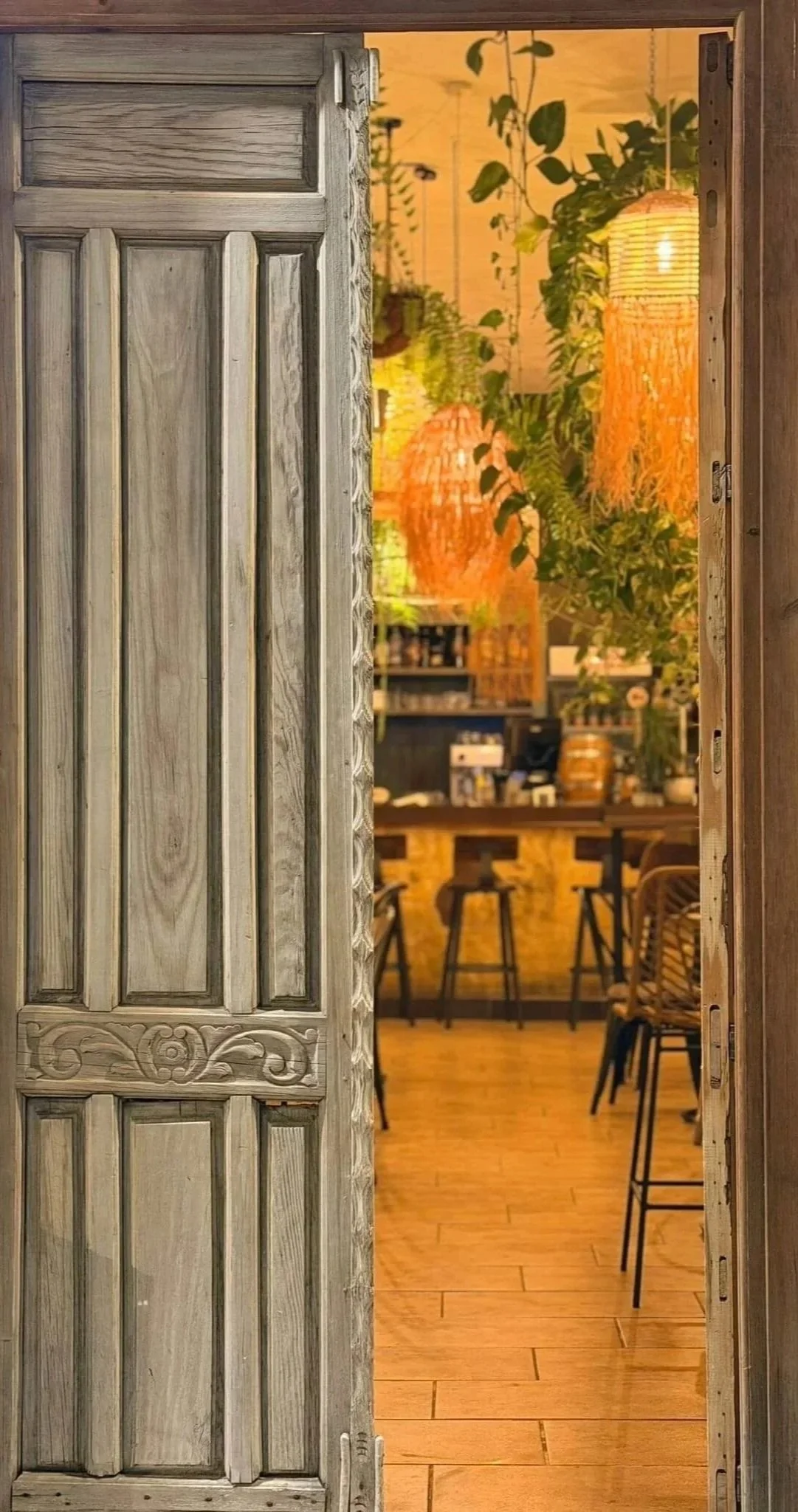
Estepona has the strongest restaurant scene on the western Costa del Sol. The old town's narrow streets are lined with traditional tabancos, contemporary Andalusian cooking and Michelin-recognised kitchens. The marina adds seafood specialists facing the harbour, and the wider area includes several of the coast's most decorated restaurants. Eating out is genuinely a year-round pleasure, not a summer event.
-
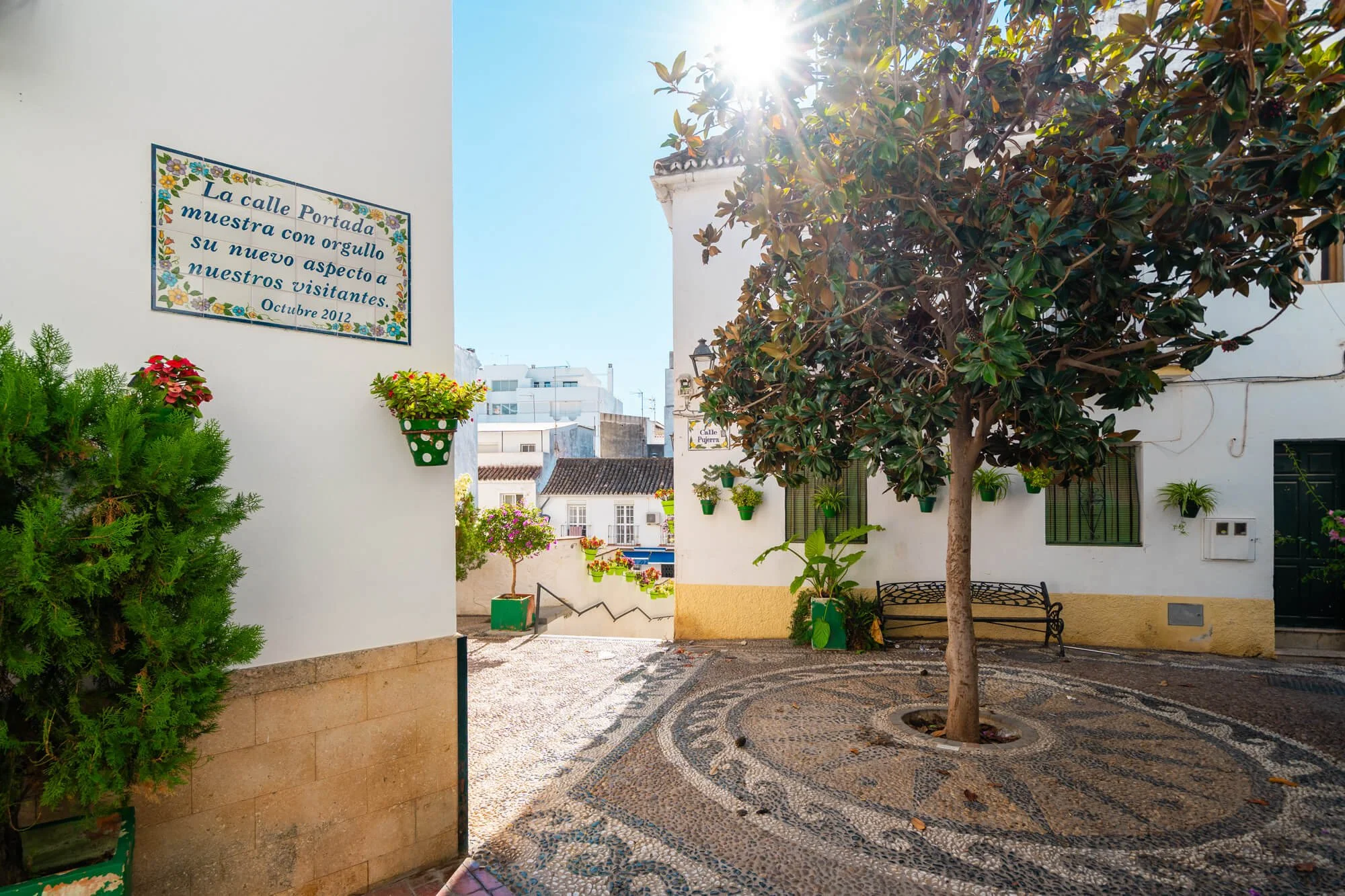
Estepona has earned its reputation as the Garden of the Costa del Sol. Sixty-plus public murals form a self-guided art trail through the old quarter, the floral programme on the whitewashed streets has won national recognition, and the town's calendar holds genuine cultural events year-round. The Auditorio Felipe VI hosts theatre, music and dance from autumn through spring, and the old town's plazas come alive for the annual Fiesta de San Isidro and the September fair.
-
Five championship courses sit within fifteen minutes of the town. El Paraíso and Atalaya occupy the gentler hills east of Estepona, Estepona Golf and Valle Romano lie inland, and Doña Julia opens out toward Casares. The world-renowned Finca Cortesin is twenty minutes west. Whatever your handicap, you'll be playing on a different course every week.
-
Estepona has one of the broader beachfronts on the Costa del Sol, with several distinct stretches connected by a paved seafront promenade. Playa de la Rada runs through the town centre, Playa del Cristo curves around a sheltered cove to the west, and Playa Bahía Dorada offers wider sand to the east. Most are blue-flag, all are accessible year-round.
-
Estepona has three private hospitals within the town: Hospiten on the eastern edge, Vithas Xanit opposite the seafront, and Clínica del Río east of town. Between them they cover most day-to-day specialties with twenty-four-hour emergency services. For more complex care, the state Hospital Costa del Sol in Marbella is twenty minutes east, and Gibraltar's St Bernard's Hospital is forty minutes west. Most international residents register private cover with one of the three local hospitals and find it serves day-to-day needs comfortably.
-
Several British and international schools serve the area. Atlas American Academy and the British School of Marbella are within twenty-five minutes, and Sotogrande International School is half an hour west, widely considered one of the leading international schools in southern Europe. Families relocating with school-age children have genuine options without committing to either Marbella or Sotogrande exclusively.
-
Estepona sits in the connected middle of the Costa del Sol. Málaga airport is an hour east, Gibraltar forty minutes west, and Marbella ten minutes along the coast. The AP-7 toll motorway makes the wider region accessible without the slower coastal road, and the high-speed AVE rail station at Antequera puts central Madrid within three hours.

10 Things To Do Here
A guide written for residents rather than visitors. The rituals, weekend habits and quiet pleasures that come to shape life in a town with more to offer than most discover.
-
The town's market rhythm runs twice a week. The Wednesday market on Calle Eslovaquia is the big one, with 250-plus stalls of produce, ceramics, textiles and household goods. Sundays the action shifts to the marina and bullring area, where three smaller markets sit within ten minutes' walk of each other: antiques and crafts at the bullring rastro, organic produce from local farmers at Plaza ABC, and the car-boot rastro for vintage finds. Most residents settle on one day as their habit.
-
Estepona's mural programme has grown into one of the most respected urban-art trails in Spain. Sixty-plus large-scale works are spread across the old quarter and outlying streets, each by a different commissioned artist. The full walk takes around two hours, but most residents do it in pieces, picking up a new mural every few weeks.
-
The old quarter is genuinely one of the best places to eat on the western Costa del Sol. The narrow streets around Plaza de las Flores and Calle Real hold dozens of bars and restaurants, from traditional tabancos to contemporary Andalusian kitchens. Long midweek lunches here are a habit worth establishing early.
-
Two ends of the spectrum within twenty minutes of the town. Finca Cortesin is among Spain's most highly rated courses, recently host to the Solheim Cup. Atalaya is the longer-established neighbourhood club where you will know the starter and the green fees feel reasonable. Most residents end up belonging to one and visiting the other.
-
The Paseo Marítimo runs unbroken for around seven kilometres along the seafront, from the Río Padrón estuary east to the Guadalmansa river. Most residents adopt a stretch as their daily walk. Some join the dawn crowd, others go at sunset. The view changes; the rhythm does not.
-
Estepona's main auditorium runs a serious cultural calendar from autumn through spring. Theatre, music, dance, and visiting orchestras. The building itself sits a short walk from the old town, and most performances run €15 to €30. It is the kind of cultural infrastructure smaller towns on the coast genuinely cannot match.
-
Half an hour inland, the Genal Valley holds some of Andalusia's most beautiful mountain landscape. The road winds through chestnut forests and white villages strung along the hillsides. Gaucín, Júzcar, Genalguacil, and Igualeja each warrant an afternoon. Lunch in any of them is part of the point.
-
Puerto de Estepona is a working marina with a relaxed approach to leisure boating. Several local outfits offer day sailing charters, paddleboard hire, and kayak rentals along the protected stretch of coast west toward Punta de la Plata. Many residents find themselves on the water more often than they expected.
-
A simple thing that becomes a habit. The marina cafés open early, prices stay local, and most residents have their preferred terrace. A cortado costs €1.50 and comes with a view of fishing boats coming and going. Sundays in particular have a rhythm that takes some living-with before you understand it.
-
Eat dinner late, sit outside, hear the town rather than see it. Many of the people who buy here describe this as the thing that surprised them most. How much of the appeal turns out to be the absence of pressure to do anything in particular.
The Property Market
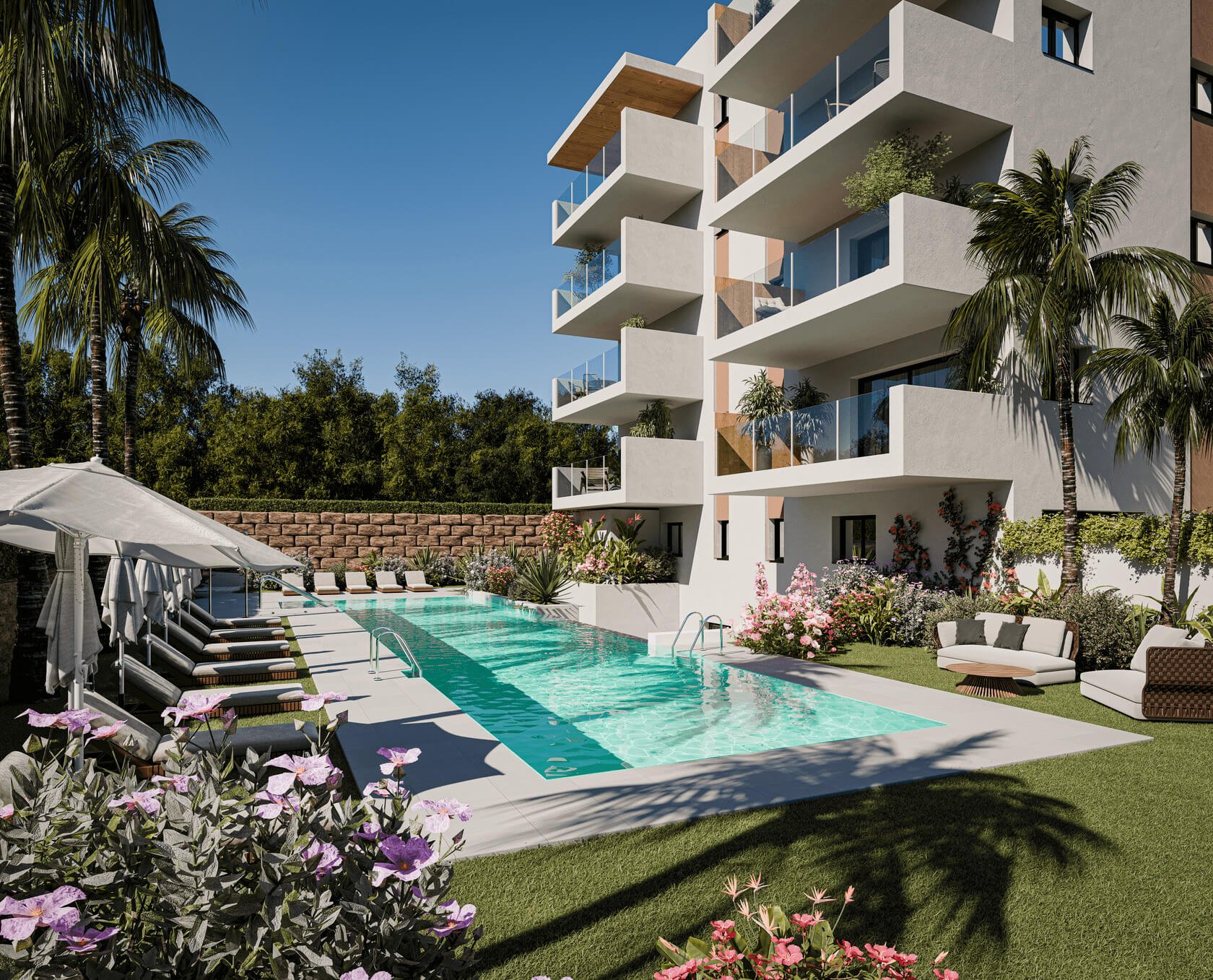
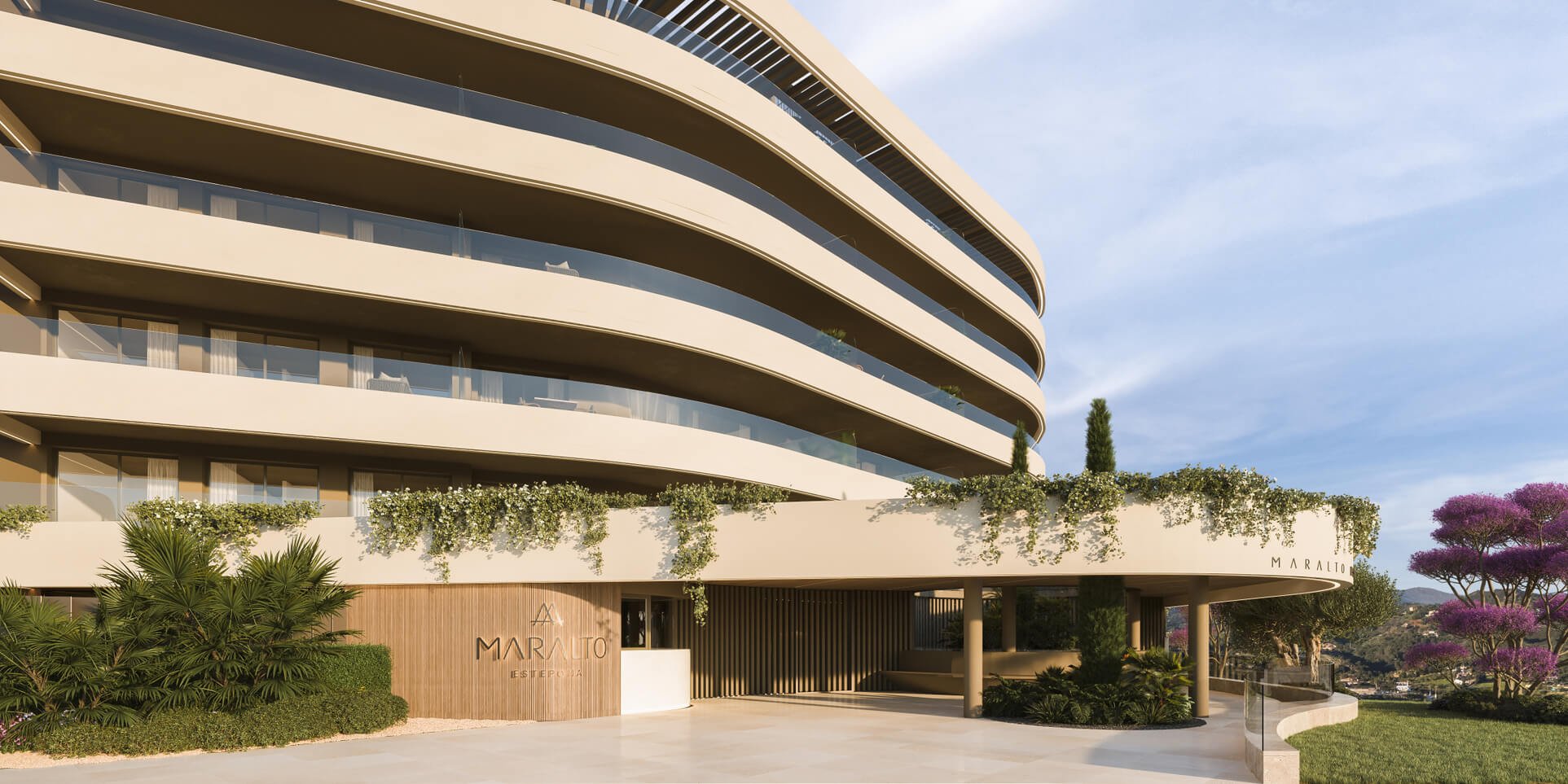
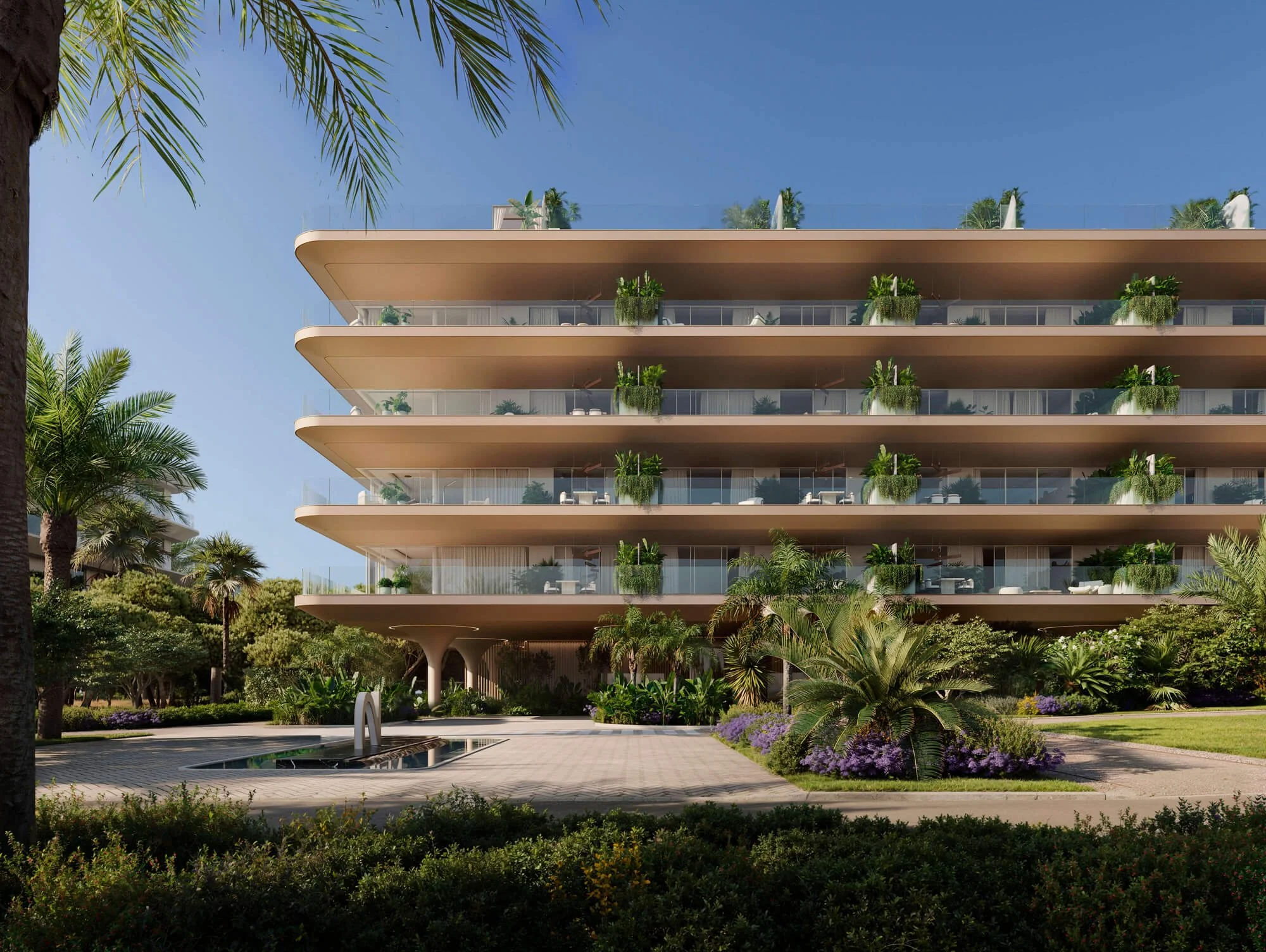
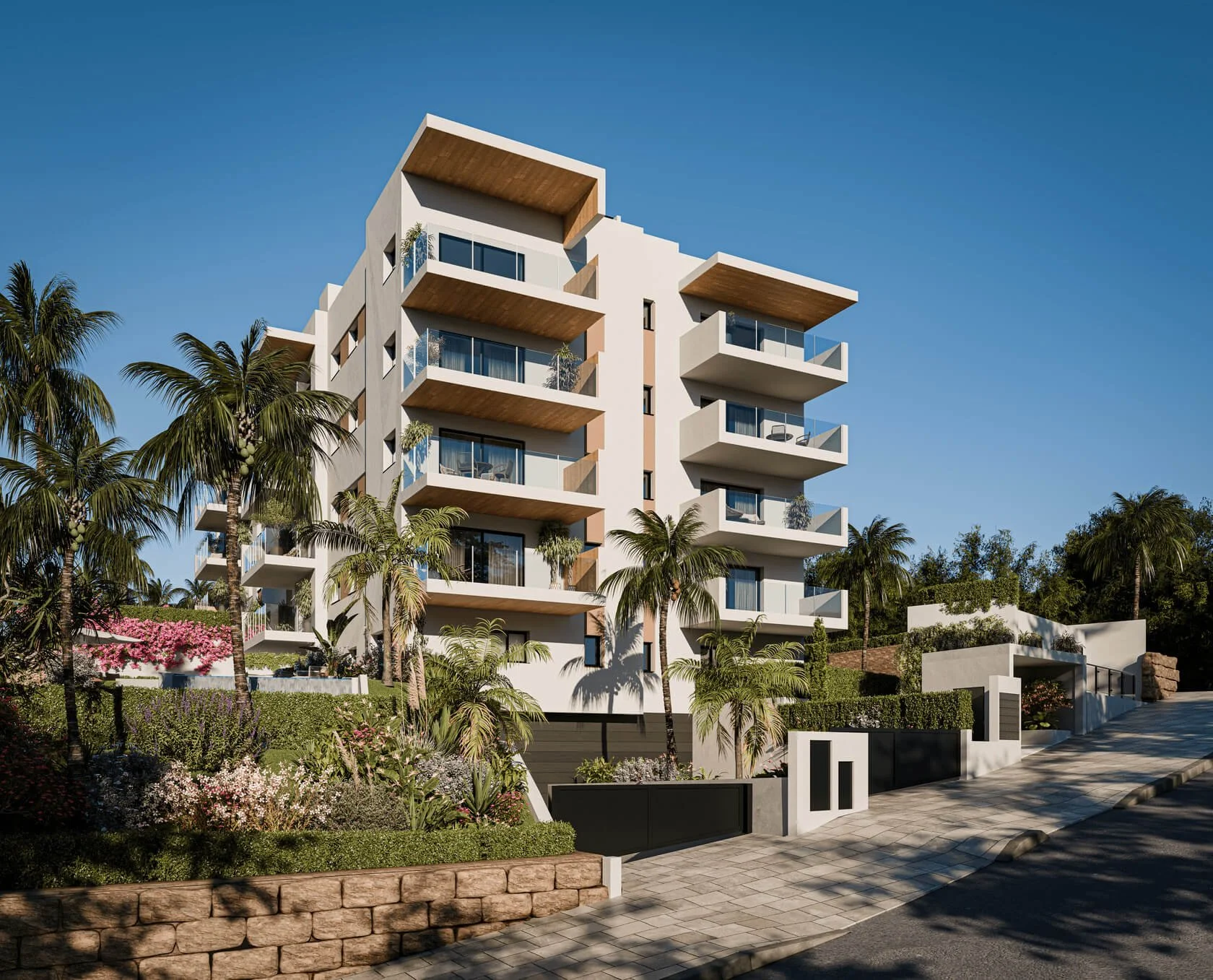
Estepona's property market is among the most mature and stable on the western Costa del Sol. New build entry prices typically start from around €550,000 for two-bedroom apartments, with central seafront and marina developments commanding €700,000 to €1.5 million for two and three-bedroom layouts. Townhouses and villas in the surrounding residential areas run from approximately €1 million upward, with sea-view villas in the established urbanizations significantly higher.
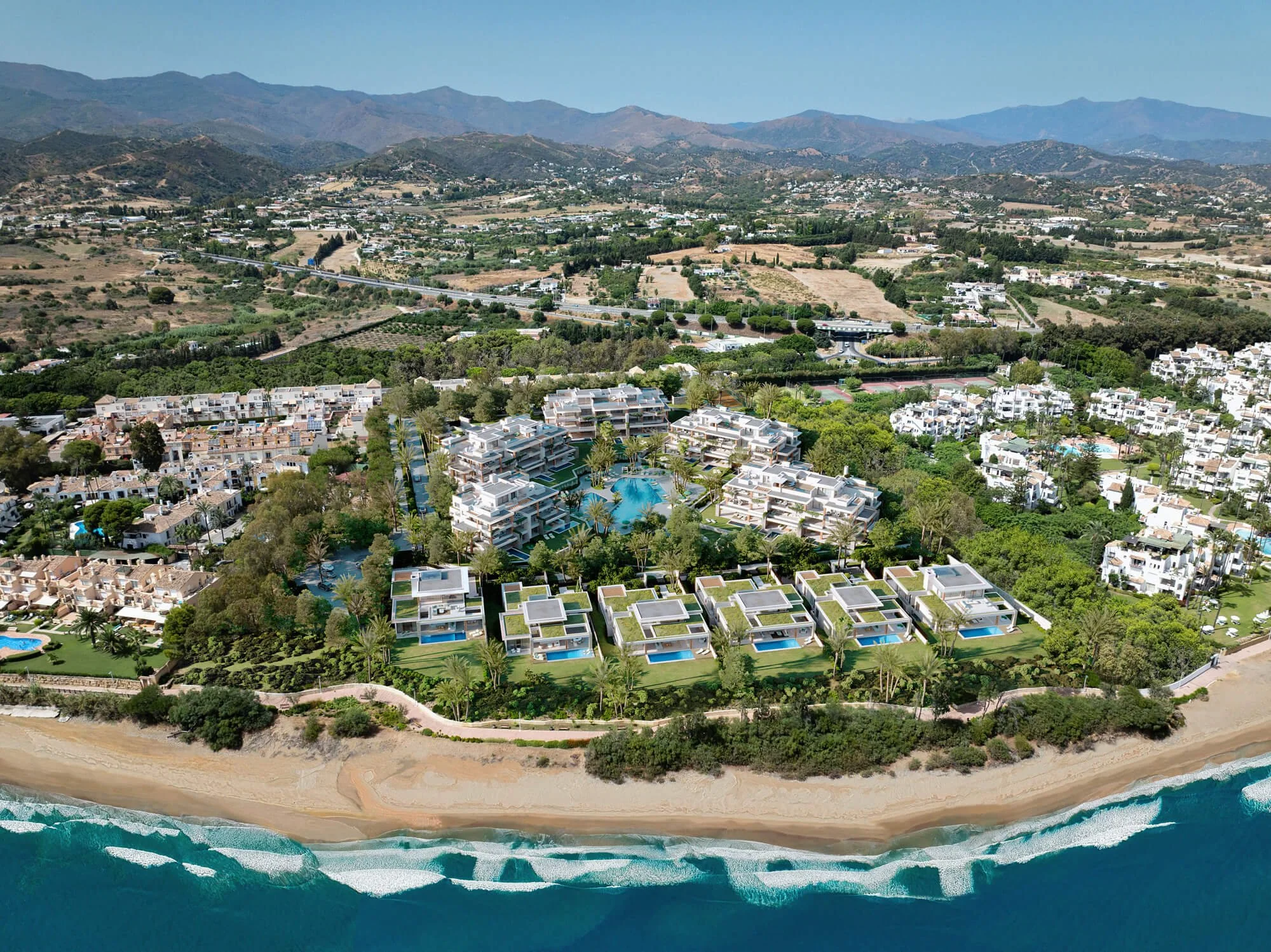
The mix is broader than most Costa del Sol towns. Apartments within walking distance of the old town offer urban-style living, newer developments to the east and west blend coastal proximity with modern open-plan layouts, and the hills inland hold a substantial market in detached villas with mountain or sea views.
Prices have risen consistently in recent years, reflecting genuine international demand and the constraints of building in a town that actively protects its character. The market is notably tighter than further west. Quality new build releases often sell out before completion, and resale stock at the better addresses tends to move quickly. The compensation is a maturity that does not depend on speculation. Estepona has been a working town for centuries; the market reflects that.
Estepona Compared
Versus Marbella.
Marbella sits twenty minutes east of Estepona, but the difference between the two towns is bigger than the drive suggests. Marbella has built itself into an international brand, with the polish and the prices that follow that recognition. Estepona has retained more of the Spanish character that Marbella has gradually traded for global appeal. Prices per square metre are substantially lower in Estepona, despite comparable infrastructure, beaches and access. The question for buyers is whether you want a town that happens to attract international wealth, or an international destination that no longer feels quite like Spain.
Versus Casares Costa.
Casares Costa is just along the coast to the west, a quieter residential stretch with the Finca Cortesin estate as its premium anchor and entry-level new build pricing around €450,000. Estepona is significantly larger and more amenity-rich, with the urban density, cultural infrastructure and walkable old town that Casares Costa doesn't have. Casares Costa is the choice for buyers prioritising privacy and golf frontage; Estepona for those wanting genuine Spanish town life with all its convenience and bustle.
For more information on property to buy in Casares Costa visit our sister-site newbuildcasarescosta.com.
Versus Manilva.
Manilva is ten minutes west, a working coastal municipality covering Sabinillas, the white village of Manilva above, and the wine country between them. Entry-level new build pricing closer to €280,000 — meaningfully more affordable than Estepona. The trade-off is scale: Manilva offers an authentic Spanish working-town character that Estepona has partly traded for international polish; Estepona offers the depth of services, cultural infrastructure and connectivity that a larger town brings.
For more information on property to buy in Manilva visit our sister-site newbuildmanilva.com.
Versus La Duquesa.
La Duquesa sits ten minutes west, on the quieter end of the same coast, with entry-level new build pricing closer to €450,000. Both towns share a setting, a climate and a coastal personality, but the experience of each is genuinely different. La Duquesa is smaller, calmer, and meaningfully better value for buyers prioritising a slower pace. Estepona is bigger, more amenity-rich, and substantially more cultural, with the infrastructure and year-round vitality that come with a town of its size. Many of our clients viewing properties along this stretch consider both. The right answer usually reveals itself after walking each one on a weekday morning.
For more information on property to buy in La Duquesa visit our sister-site newbuildduquesa.com.
Versus Sotogrande.
Sotogrande lies twenty minutes west, a gated international community of villas, polo fields and one of southern Europe's leading marinas, with apartment pricing from around €600,000 and villas from €2 million and well above. The two places appeal to fundamentally different buyers. Sotogrande offers privacy, scale and seclusion at the upper end of the market. Estepona offers walkability, town life, and the rhythms of an integrated Spanish community. Many Sotogrande residents actually spend more time in Estepona's old quarter than in their own, drawn to a vitality that gated developments cannot manufacture.
For more information on property to buy in Sotogrande visit our sister-site newbuildssotogrande.com.
Buyer Profile
Estepona attracts buyers who have looked seriously at the better-known names and chosen substance over showiness. The pattern is usually someone who has considered Marbella and decided it was too international or too expensive, considered Sotogrande and decided it was too gated or too remote, and discovered Estepona as the more authentic middle option. A town rather than a brand. A place that holds its character year-round rather than emptying out in winter.
The buyer base is predominantly Northern European, with strong British, Dutch, Scandinavian and German representation, and a smaller but growing American contingent. Around half are buying for full-time relocation rather than holiday use, which is a meaningfully higher proportion than further west. Most have the budget for Marbella and chose not to spend it that way.
For new build buyers specifically, the appeal is the combination of substance and specification. A mature town with the cultural and practical infrastructure already in place, modern properties built to current standards, and ongoing development that has stayed measured rather than wholesale. Estepona has not overbuilt itself, and the better new build addresses tend to hold their quality.
Considering Estepona?
KIWII Real Estate has worked extensively in the area since 2021 and maintains a curated selection of the new build developments we consider best-in-class. If you'd like to see what's currently available, view new build properties in Estepona. For a conversation about whether Estepona is right for you, contact KIWII Real Estate.
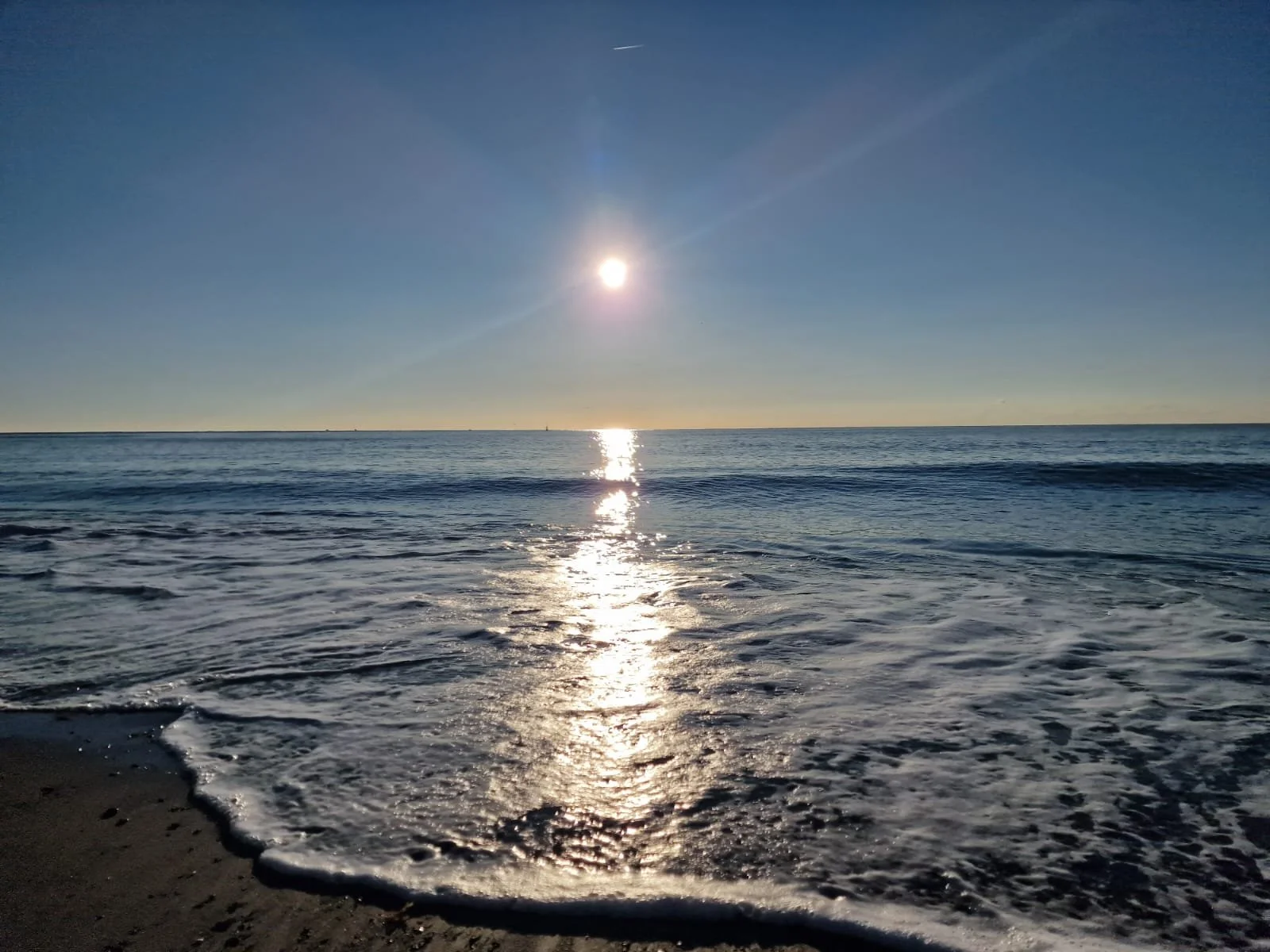
Estepona, in numbers
Begin Your Search
-
Properties
-

Cost Calculator
-

Enquire
The western Costa del Sol, curated by KIWII
KIWII Real Estate curates new build property across the western Costa del Sol — five dedicated microsites for five distinct locations, each chosen and vetted for build quality, licensing transparency, and location. Each a distinct proposition, explore the four other microsites to find your ideal location: